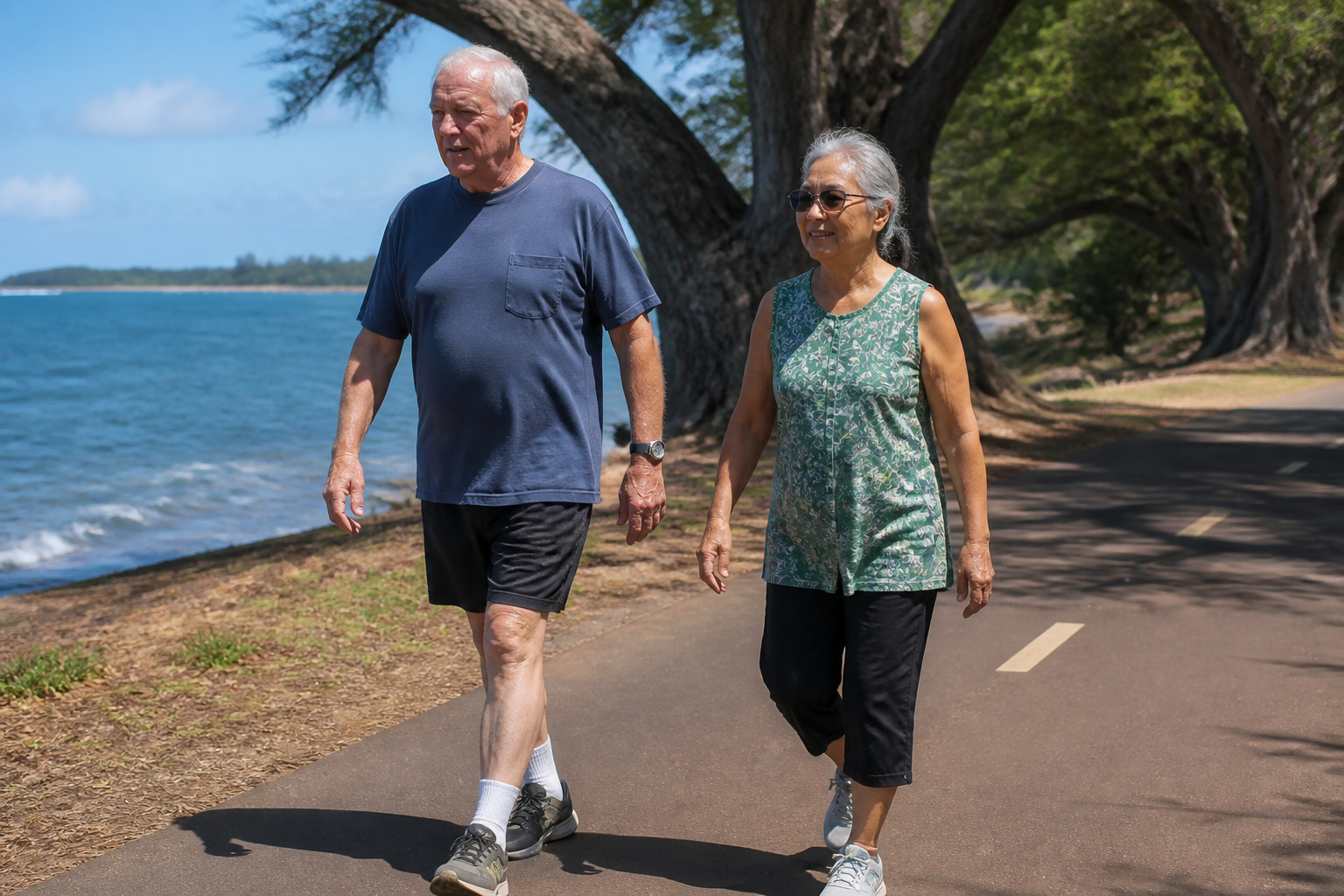
The 5 Components of Physical Fitness Explained for Seniors
By Doug Jones
The 5 Components of Physical Fitness Explained for Seniors
What are the 5 components of physical fitness?
The 5 components of physical fitness are circulo-respiratory power, body composition, muscular strength, muscular endurance, and joint flexibility. Together, these five core areas keep your heart pumping, your muscles strong, your body lean, and your joints moving smoothly so YOU can stay active and independent every day!
What's In This Article
- Understanding the Five Essential Pillars of Senior Fitness
- Heart Health and Muscle Power: Balancing the 5 Components of Physical Fitness
- Muscular Endurance and Joint Mobility for Daily Freedom
- Managing Body Composition Safely and Effectively
- Putting All Five Parameters Together Every Week
- 5 components of physical fitness: Questions I Get Asked Most
Aloha from beautiful Kaua'i! Doug Jones here, coming to you with warm breezes from near Bali Hai! If you want to keep strolling our sunny golden beaches, playing with your grandkids, or simply moving around your home without unnecessary aches and pains, you need a safe and well-rounded exercise plan. Concentrating on just one exercise—like only walking or only stretching—can leave gaps in your physical routine.
To stay truly strong, vibrant, and full of energy, you need to understand the 5 components of physical fitness. I designed my whole program and Super 7 workout methods around these exact parameters because balance is key to lifelong vitality! Remember my favorite motto: Smart-Simple-Speedy-Safe! Below is my classic Garden Island newspaper column where I break down every single parameter. Here is the column that started it.
Understanding the Five Essential Pillars of Senior Fitness
Aloha, my friends!
It’s a new month, the best time to recommit to following a well-rounded fitness program. While most people tend to concentrate on only one or two aspects of fitness… such as frying fat, bulging biceps, or stretching splits… this can lead to imbalances, the gateway to injury.

To safely and effectively improve your physical fitness, I strongly recommend following a routine that improves each of the five foundational parameters for increased vitality, longevity, and functionality.
...Circulo-Respiratory Power...
This refers to how well your heart, blood vessels, lungs, and relevant muscles work together to supply oxygen during exercise… and the body’s ability to take in, transport, and use oxygen efficiently.
Proper circulo-respiratory conditioning produces a remarkable array of health benefits, including decreased risks of hypertension, high cholesterol, coronary artery disease, obesity, anxiety and depression, and diabetes mellitus.
Better aerobic fitness also means you can handle a wider range of physical activities, from rest to maximum. It also improves fat-burning ability at all exercise intensities and gives you more energy to enjoy everyday life.

Bolster it by engaging in movements which use large muscle groups rhythmically and continuously: walking, running, cycling, hiking, rollerblading, swimming, stair climbing, rowing, jumping rope, slide boarding, etc. Sustained movement at varied intensities is key.
Aerobic power is quantified as maximum oxygen uptake, the highest rate at which your body can take in and utilize oxygen during physical activity. This value increases significantly with training, thanks to improved heart pumping ability and greater oxygen extraction by muscle cells.
...Body Composition...
Body composition divides your total body weight into fat mass and fat-free mass (everything else, like muscles, bones, organs). While a small amount of body fat is essential for normal biological function (approximately 4% for men, 12% for women), excess fat can pose serious health risks.
Higher body fat levels are associated with high blood pressure, elevated cholesterol and blood lipids, diabetes, cancer, heart disease, and even increased psychological burdens. Therefore, maintaining body fat within healthy limits is crucial.

Body fat percentage is a much more meaningful measurement than total weight or Body Mass Index (BMI), which is essentially a weight-to-height ratio. Ideal body fat ranges for men and women are roughly 8–15% and 16–23%, respectively. Obesity is generally classified as over 25% body fat for men and over 32% for women. The CDC states that over 40% of U.S. adults have obesity; unfortunately, they used BMI as their indicator. Whoops!
...Muscular Strength...
Muscular strength is defined as the maximum force a muscle, or group of muscles, exerts in a single effort. Be careful testing it, though; it’s not worth the risk.
However, potentiating muscular strength is essential, and is central to a balanced fitness program… improving body composition, supporting sports performance, enhancing your ability to perform daily activities, and preventing both acute and chronic injuries. Plus, increasing muscle mass significantly raises your metabolic rate, helping with fat loss and boosting overall vitality.
The best way to increase muscular strength (and size and tone) is by exercising Eccentrics, the foundation of my Super 7-Week Shape-Up System. I’ve written copious quantities of content on the subject, and much is available online for free at the link below. Enjoy!
...Muscular Endurance...
On the other end of the continuum, muscle endurance is the ability to sustain sub-maximal forces repeatedly, or hold a muscle contraction for an extended period. Think of it as your muscles’ stamina… for constant contractions.

Both muscular strength and endurance are specific to each muscle group, so a well-rounded program should include exercises targeting all major groupings: hips, thighs, calves, back, chest, shoulders, arms, forearms, neck, abdominals, and lower back.
Training for endurance often involves using lighter weights for higher repetitions. Though I typically prefer the super synergistic solution of 7 repetitions, “slowering the lowering” resistance for 7 seconds down, lighter sets of 77 regular repetitions are a periodic hoot, for sure.
...Joint Flexibility...
Flexibility is defined as the capacity of joints to move through their full range of motion. The primary limitations in tightness are soft tissue structures, such as muscles, tendons, ligaments, and joint capsules, with muscles being the most modifiable, through training.
Stretching exercises - from steady static holds to proprioceptive neuromuscular facilitation (PNF) - can significantly increase joint mobility. Seriously, read what I’ve already written. It’s good stuff!
Keep in mind that flexibility is joint-specific: being flexible in one area doesn’t guarantee flexibility elsewhere. Also, always perform stretching exercises after strength and/or stamina, never before. Warm muscles stretch. Cold muscles snap!
Heart Health and Muscle Power: Balancing the 5 Components of Physical Fitness
When folks talk about exercise, they often jump straight to walking or riding a stationary bike. While your circulo-respiratory health (your heart and lungs) is vital, it is only part of the full picture! You also need muscle strength to climb steps, carry groceries, and stay upright on your feet.
Safe strength training does not require heavy barbells or complicated machines. Standing facing a sturdy kitchen counter with your hands resting on the edge for support while performing gentle calf raises or wall push-ups builds real functional power! Remember, the difference between doing nothing and next to nothing... is EVERYTHING!
Simple Daily Actions
- Take a brisk 15-minute daily walk along level ground to boost aerobic power.
- Do 7 slow, controlled wall push-ups while keeping your core tight and feet flat.
- Hold onto a sturdy kitchen counter for support while doing gentle mini-squats or heel lifts.
Muscular Endurance and Joint Mobility for Daily Freedom
Muscular endurance allows your body to keep moving throughout the day without tiring out quickly. It works hand-in-hand with joint flexibility to ensure your body moves smoothly without stiffness or pulling.
Stretching should always happen AFTER your muscles are warm—never stretch cold muscles! Cold muscles snap, but warm muscles stretch smoothly. Try doing simple chest stretches near a doorway after your daily walk. You can learn more about safe movement tempos on our Super 7 fitness guide page to protect your joints while building endurance.
Building endurance using the 5 components of physical fitness means training your muscles for sustained daily tasks, whether that means working in the garden or taking a scenic walk through the park. YOU can build stamina safely at any pace!
Managing Body Composition Safely and Effectively
Body composition measures the ratio of lean muscle mass to fat mass. Maintaining healthy muscle mass keeps our metabolic rate humming along nicely, helping manage body fat without extreme diets.
Instead of relying on standard scales or misleading BMI charts, focus on how your clothes fit and how much energy you feel each morning. Coupling gentle aerobic work like shallow pool walking with light, controlled resistance training keeps lean muscle active and healthy.
Smart Tips for Body Composition
- Include lean protein with your meals to nourish and support muscle tissue.
- Engage in gentle water walking or light swimming for low-impact cardio.
- Focus on building muscle tissue through slow, controlled movements to boost metabolism.
Putting All Five Parameters Together Every Week
Mastering all 5 components of physical fitness does not require spending hours in a gym. It is about consistent, daily smart choices that keep every system in your body functioning at its absolute best!
Keep your routine Smart-Simple-Speedy-Safe! Spread your activities across the week so your heart, muscles, and joints get equal attention without feeling overworked or exhausted.
- Monday & Thursday: Light resistance using wall push-ups and counter-supported heel raises.
- Tuesday & Friday: Scenic level walks or shallow pool movement for aerobic conditioning.
- Wednesday & Saturday: Gentle post-walk stretches for calves, hamstrings, and chest.
5 components of physical fitness: Questions I Get Asked Most
What are the 5 components of physical fitness?
The 5 components are circulo-respiratory power (aerobic conditioning), body composition, muscular strength, muscular endurance, and joint flexibility. Balancing all five ensures your heart, muscles, and joints stay strong and functional for daily living!
Why is body composition more important than weight or BMI?
Standard weight scales and BMI charts do not distinguish between fat mass and muscle mass. Maintaining lean muscle mass keeps your metabolism active and supports joint function, which is far more critical for vitality than a simple number on a scale!
When is the safest time to perform flexibility stretches?
Always stretch after your muscles are warm, such as after a walk or light activity! Cold muscles snap, while warm muscles stretch safely to improve your joint mobility without risk of injury.
How can seniors safely practice muscular strength training at home?
You can build strength safely by doing wall push-ups or standing heel lifts while holding onto a sturdy kitchen counter for support! Focus on slow, controlled movements to protect your joints while strengthening your muscles.
Ready to put this to work today? Try SUPER 7 FREE for a Smart-Simple-Speedy-Safe daily starting point: no gym, no equipment, no downloads - just open and go.
In Health & With Hope,
Doug :-)

About the Author: Douglas Jones, BS, MA, CSCS
Douglas Jones earned his Master's Degree in Exercise Physiology from the University of Maryland and is a Certified Strength and Conditioning Specialist. As an Exercise Physiologist and Concierge Fitness Professional based in Kaua'i, he has helped thousands of clients in person and millions online build simple, science-based habits for strength, stamina, stretching, and sustenance.
Doug is the founder of the Super 7 System — a complete training system you can do at home in as little as 7 minutes a day.
Watch his free intro and start free at Super7System.com.