Eccentric Stretching for Seniors: Fast Flexibility Secrets
By Doug Jones
Q: How does eccentric stretching benefit senior flexibility?
A: Eccentric stretching lengthens muscles under tension, which safely increases muscle length and improves joint mobility more effectively than static holding.
What's In This Article
- Doug's original column: Super Stretching #2
- How Controlled Muscle Lengthening Unlocks Tight Muscles
- Restoring Senior Range of Motion Without Strain
- The Role of Eccentric Exercise Flexibility in Daily Safety
- FAQ: the questions I get asked most
If you have ever felt like your tight muscles are stubbornly resisting every holding pose, eccentric stretching for seniors offers a gentle, brain-based breakthrough to unlock lasting flexibility.
Aloha! Here on Kaua'i, I always remind my clients that improving your mobility should never feel like a tug-of-war with your own body. By coaxing your nervous system to work with you rather than fighting against cold, tight tissue, you can invite your muscles to loosen up quickly and safely.
In this classic column, we look at how a very subtle, controlled muscle contraction triggers your body's natural relaxation response. Let us explore how you can use this simple science to move with far more comfort and confidence every day.
Start free at Super7System.com, or take the free fitness sampler and see the full program details.
Original Column: Super Stretching #2
Dear Doug,
Mahalo for continuing to share some of your insights regarding the fastest way to improve flexibility.
Jennifer A, Kauai -
Aloha, Jennifer. As I mentioned in my previous column, we all need to do something to counteract the millions of “shortening” contractions that occur to our muscles throughout each day. There is a single secret which causes the elasticity of your muscles to increase in seconds, quite literally. It’s called “Eccentrics in Stretching” and you’re going to love it!
Joint flexibility, by definition, is the functional capacity of the joints to move through a full range of movement. The major limitation to joint flexibility is the tightness of soft tissue structures (joint capsules, muscles, tendons, ligaments). Of all of these tissues, muscle is the most modifiable structure in terms of improving flexibility.
Proper stretching technique focuses on the slow and deliberate elongation of your muscles. Stretching a muscle is, by definition, an “Eccentric” muscle action. The two ends of the muscle are moving off-center, away from the middle of the muscle belly. If you did nothing else, slow static stretching would eventually work, at least to some extent.
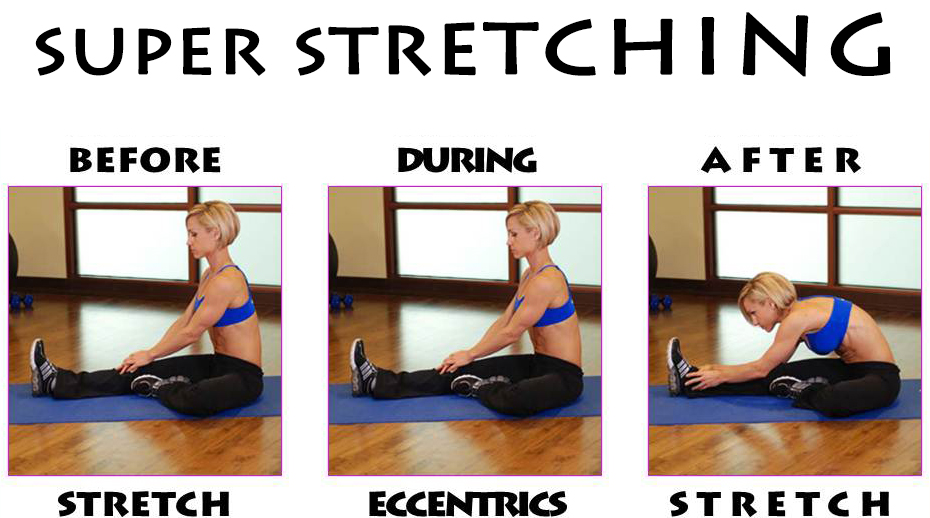
Slowly stretching the two ends of the muscle apart, relaxing the muscle as much as possible, and then stretching a little bit further is a safe and conventional approach. Eccentrics in Stretching, on the other hand, is an unconventional technique for rapidly increasing muscle plasticity. Still safe and sound, it is the most productive form of flexibility training in existence.
Everybody is quite different and each body responds slightly differently; however, this super-advanced method can be effectively applied to each muscle and every movement.
My system is based upon a verified and well-established modality, often used in physical therapy and rehabilitation. This invaluable tool is called “Proprioceptive Neuromuscular Facilitation (PNF)” and has been repeatedly proven as the preeminent method for improving flexibility, essentially immediately.
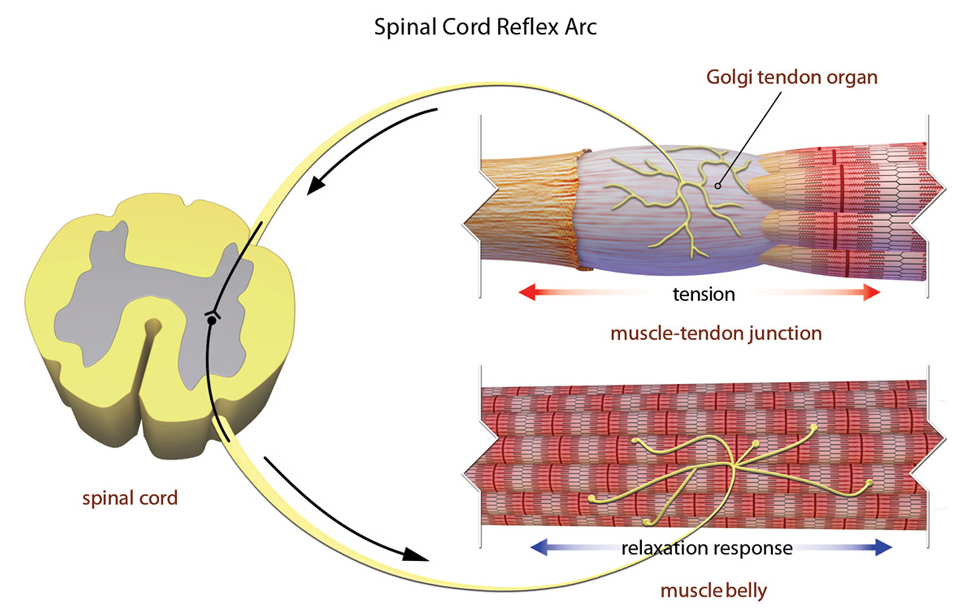
The technique uses the muscles’ internal proprioceptors to send relaxing messages to the muscle being stretched. How are these proprioceptors “triggered?” By doing the most off-center and unconventional thing that you can possibly do during a stretch… slowly contracting the stretched muscle. Here is the science, in simple terms: Located within the muscle-tendon junction is a sensor called the Golgi Tendon Organ (GTO), which functions by sensing how much tension is being placed on the tendon (which connects muscle to bone). When a muscle is slowly contracted during a stretch, the GTO is activated, prompting and persuading the muscle to further relax. In a nutshell, while in a stretched position, slowly contracting and shortening a few of your muscle fibers will result in the relaxation and lengthening of the rest.
This “inverse stretch reflex” is the basis for Eccentrics in Stretching, and goes way beyond the concept of steady static stretching, entering the world of actually training for flexibility.
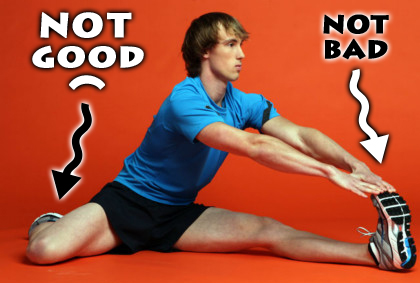
Slowly and steadily contracting a portion of the muscle towards the center allows the muscle as a whole to instantly relax into a more elongated and off-center (aka Eccentric) position. Let’s imagine a muscle having two sides, say a top and a bottom, as pictured. When the fibers on the bottom of the muscle contract, or shorten, the fibers on the top of the muscle have no choice but to stretch, or lengthen.
After the brief contraction is complete, the newly stretched fibers now allow for the entire muscle to become instantly lengthened. This process is definitely the fastest facilitator of flexibility available… anywhere.
No other training technique compares to the power of Eccentrics in Stretching for providing an instantaneously safe and sound remodeling of muscle and connective tissue.
Please remember that, in order to stretch a muscle safely and effectively, the muscle must be warm. Do not stretch to warm up but, rather, warm up to stretch. Cold muscles (& tendons) are analogous to cold silly putty or taffy. Stretching any of these substances while they are in a less-than-warmed state is not cool. To avoid any unwanted snap, crackle, or pop, ALWAYS STRETCH AFTER exercise, never before.
Next time, we will go through the mechanics of a specific stretch, so that you can try this technique firsthand while reaching for your foot. I think that you’ll be absolutely amazed! Until then…
In Health & With Hope,
Doug :-)
Ready to put your flexibility to work? Try SUPER 7 FREE for a Smart-Simple-Speedy-Safe daily starting point: no gym, no equipment, no downloads - just open and go.
In Health & With Hope,
Doug :-)
How Controlled Muscle Lengthening Unlocks Tight Muscles
When you ease into a stretch, your natural instinct might be to pull harder, but real progress comes from controlled muscle lengthening. Instead of forcing a tight hamstring or calf to yield, you give your body time to process the physical signal. This slow, deliberate approach keeps your nervous system calm and stops your protective stretch reflex from kicking in and tightening the tissue right back up.
To safely practice controlled muscle lengthening at home, always anchor yourself near a sturdy kitchen counter or heavy tabletop for balance support. As you gently move into a comfortable stretch position, keep these steps in mind for your routine this week:
- Warm up first with five to ten minutes of light walking around the house.
- Ease into a mild stretch until you feel light tension, never pain.
- Gently press against the resistance for three seconds at roughly twenty percent effort.
- Exhale slowly, release the effort, and allow the muscle to melt into a slightly deeper, comfortable range.
Listen closely to your body throughout the process. If you feel any sharp discomfort or joint pressure, back off immediately. Gentle consistency always wins over force when keeping your body moving freely.
Restoring Senior Range of Motion Without Strain
Maintaining a functional senior range of motion is essential for everyday life, whether you are reaching for a cup on a high shelf or tying your shoes. As we age, connective tissues naturally lose some water content, making muscles feel stiffer in the morning. However, you do not have to accept losing your independence or mobility as an inevitable part of getting older.
Using gentle PNF principles allows you to reset your muscle length without causing tiny tears or inflammation. When you encourage your nervous system to release tension, your joints move much more smoothly through their natural pathways. This approach protects delicate joint capsules while giving you back the movement you need for daily living.
Try focusing on one major muscle group this week, such as your calves or hamstrings. Place one hand firmly on a wall or counter for safety. Never bounce or force a movement. If you have had a recent joint replacement or suffer from severe arthritis, consult your healthcare provider before trying new tension techniques. Moving with quiet control keeps your joints happy for years to come.
The Role of Eccentric Exercise Flexibility in Daily Safety
Building eccentric exercise flexibility offers a dual benefit: it helps you gain lasting length in tight muscles while simultaneously keeping the surrounding tendons strong. When a muscle lengthens under light control, it learns to handle stress in its vulnerable, extended position. This built-in resilience is key for preventing trips, stumbles, and sudden pulls during everyday tasks.
Always remember the cardinal rule of stretching: never stretch a cold muscle. Cold muscles and tendons act like cold rubber bands—they are prone to snapping if pulled too quickly. Perform your stretching work right after your daily walk or after a warm shower when your blood circulation is elevated and your tissues are pliable.
Here is a safe way to apply this principle to your weekly routine:
- Stand tall near a counter support and slowly lower your heels off the edge of a small threshold or flat floor position.
- Hold the subtle stretch for a breath, lightly engage the calf muscle, then let it completely loosen.
- Repeat this quiet release just two or three times per side.
By treating your muscles with respect and patience, you will build comfortable flexibility that supports your active lifestyle safely.
For general background, see NIH PMC study on the effectiveness of eccentric training on flexibility and muscle function..
FAQ: Questions I Get Asked Most
What makes eccentric stretching for seniors different from regular static stretching?
With eccentric stretching for seniors, you combine gentle muscle elongation with a brief, mild contraction. While traditional static stretches simply pull on passive tissue, eccentric techniques engage nervous system sensors like the Golgi Tendon Organ. This signals the muscle to instantly release deep tension safely without forceful pulling.
Is it safe to try eccentric stretching if I have tight joints?
Yes, provided you warm up first and avoid pushing into pain. Always hold onto a sturdy counter or wall for balance support. By using gentle contractions at a low effort level, you coax the muscle to relax without putting excessive stress on vulnerable joints or sensitive connective tissues.
When is the best time during the day to stretch my tight muscles?
The best time to stretch is right after a light exercise session, a warm shower, or a short walk around the block. Warm muscles are pliable and responsive. Never stretch cold muscles, as cold tissue is less forgiving and far more susceptible to strain or injury.
How often should older adults perform these active release stretches?
You can safely practice these gentle techniques two to three times a week. Focus on slow, quality movements rather than high repetitions. Giving your body a day of rest between sessions allows your nervous system and muscle fibers to adapt comfortably to their improved range of motion.

About the Author: Douglas Jones, BS, MA, CSCS
Douglas Jones earned his Master's Degree in Exercise Physiology from the University of Maryland and is a Certified Strength and Conditioning Specialist. As an Exercise Physiologist and Concierge Fitness Professional based in Kaua'i, he has helped thousands of clients in person and millions online build simple, science-based habits for strength, stamina, stretching, and sustenance.
Doug is the founder of the Super 7 System — a complete training system you can do at home in as little as 7 minutes a day.
Watch his free intro and start free at Super7System.com.
Medical disclaimer: This article is educational only and is not medical advice, diagnosis, or treatment. Stop any movement that causes pain, and check with your healthcare provider before starting new exercise or changing your diet.
Seven honest minutes at your own counter. Try Super 7 Free →