Exercise Consistency for Seniors: Simple At-Home Fitness
By Doug Jones
Q: How can seniors maintain exercise consistency after a routine interruption?
A: Seniors can maintain exercise consistency by viewing brief breaks as normal, starting with manageable short sessions, and focusing on daily movement habits at home.
What's In This Article
- Doug's original column: HAPPY LEAP YEAR! REVISITING RESOLUTIONS
- Simple Senior Routine Habits That Last
- Practical Fitness Restart Tips for Older Adults
- Designing a Safe At Home Senior Workout
- FAQ: the questions I get asked most
Building exercise consistency for seniors does not mean sweating through intense, exhausting workouts every single day without a break.
When Scott wrote in from Kapa`a feeling frustrated that his New Year's resolutions lasted only two days, I reassured him that he actually proved something wonderful: he proved he can start. The key to staying with a routine isn't forcing non-stop effort, but learning to honor the natural rhythm of work and rest.
Fitness for older adults relies on balance, recovery, and smart pacing. When you alternate small doses of strength, stamina, and stretching with adequate rest, your body repairs itself safely and builds lasting vitality without burnout or joint strain.
Take a look at my column below to see how embracing short daily efforts—and giving yourself permission to rest—can completely transform your health this month.
Start free at Super7System.com, or take the free fitness sampler and see the full program details.
Original Column: HAPPY LEAP YEAR! REVISITING RESOLUTIONS
HAPPY LEAP YEAR! REVISITING RESOLUTIONS!

Aloha Doug,
I can hardly believe that it’s already February. Argh! My resolutions for a healthy new year only lasted for a day or two. I stopped working out almost as quickly as I started. I’m frustrated, but I’m also very determined to make this month different. I need to be realistic, Doug. What’s the absolute least I can do to get results? Please help me!
Mucho Mahalo,
Scott, Kapa`a -

GREAT, SCOTT!!
This is a great question!!
Firstly, let me reassure you that you are probably doing better than the majority. And, you are definitely not alone in your thoughts. With so many others paddling the same body boat today, you’re helping to navigate our ship-shape journey for everyone on board. Mahalo, and keep the faith, my friend.
Let me start with some good news for you, Scott. Starting a workout program isn’t your issue. You did that just fine. Sure, it only lasted for a day or two, but that’s better than many. In fact, it’s probably better than most. Exercising intent is intense, right? But, you did it; you did something.
You started. You stopped. Now, we just need to expand and expound upon this predictable pattern.

Alternating between exercising and not exercising is the name of the game. See… you already know the secret. Most people probably don’t have this perspective, but being consistently inconsistent is actually the answer.
Stamina routines should be followed by recuperation. Strength repetitions should be followed by rest. Stretching regimens should be followed by relaxation. Sustenance rules should be followed by release.
So, your perceived problem of starting and stopping a program of healthy eating and exercise is also your solution. We just need to tighten up the timeline. Does this make sense? I have no doubt that you can dramatically transform your body and life this month, one with an extra leap day at the end to celebrate your success. But, you really need to embrace the concept of not having to exercise every single day, or eat perfectly for every single meal.

As much as this is about addressing the physicality and physiology of your body, it is also about considering the emotionality and intellectuality of your brain.
With that, Great Scott, it’s time to address the true root of your question. How little can you do? Trust me; the following are my shortest synopses ever. You’ll need to dig through my website and columns for more specifics, but here are the crucial cruxes of my copious content. If you do the following, you will be amazed at how you look and feel by this time next month. Please remember that, although it is possible to transform your physique by doing very little, to do so safely and swiftly, you’ll need to learn a lot!
...STRENGTH...
START strength training with one muscle or exercise per day, Monday thru Saturday: Push, Legs, Pull, Push, Legs, Pull. START lowering weights super slowly. START my Super 7-Week Shape-Up System for free.
STOP performing intense and overwhelming full-body routines. STOP starting with dangerous, ballistic motions and movements. STOP trying to keep up with the Joneses, including me.
...STAMINA...
START different daily activities, rotating between hike, swim, bike, scoot, etc. START alternating between perceived intensities of “very, very light” and “somewhat hard,” for 7 swings back and forth. Start today!

STOP doing only one activity, such as walking. STOP counting the minutes. STOP thinking that you must maintain high intensities for long durations. STOP focusing only on heart rate.
...STRETCHING...
START stretching your muscles after each exercise, not before. START utilizing Proprioceptive Neuromuscular Facilitation to instantly lengthen muscles. START reading my previous columns on PNF.

STOP stretching to warm up instead of warming up to stretch. STOP stretching ligaments by staying within normal ranges of motion. STOP only stretching; add stamina and strength.
...SUSTENANCE...
START eating only fresh fruit in the morning. START eating raw veggies and salads before anything else during the day. START drinking freshly-squished vegetable juices, every day. START eating food that grows.

STOP eating anything that is not nourishing your cells. STOP eating junk, fake, and fast “food.” STOP eating “food” that is manufactured. STOP following these rules only one day per week.
Start the month off right by joining me for my Super Sunday Sunset Stroll “Friends in Fitness” Walk & Talk. We meet at the Kapa`a Swimming Pool, right behind Chicken in a Barrel. I’ll be holding a smiley hat with your name on it.
Ready to put your consistency to work? Try SUPER 7 FREE for a Smart-Simple-Speedy-Safe daily starting point: no gym, no equipment, no downloads - just open and go.
In Health & With Hope,
Doug :-)
Simple Senior Routine Habits That Last
Building sustainable senior routine habits begins with lowering the barrier to entry so far that success becomes easy. Instead of promising yourself an hour of exhausting exercise every morning, focus on small, manageable actions that fit naturally into your day. Rotating your physical focus daily keeps workouts fresh while allowing tired muscles time to recover.
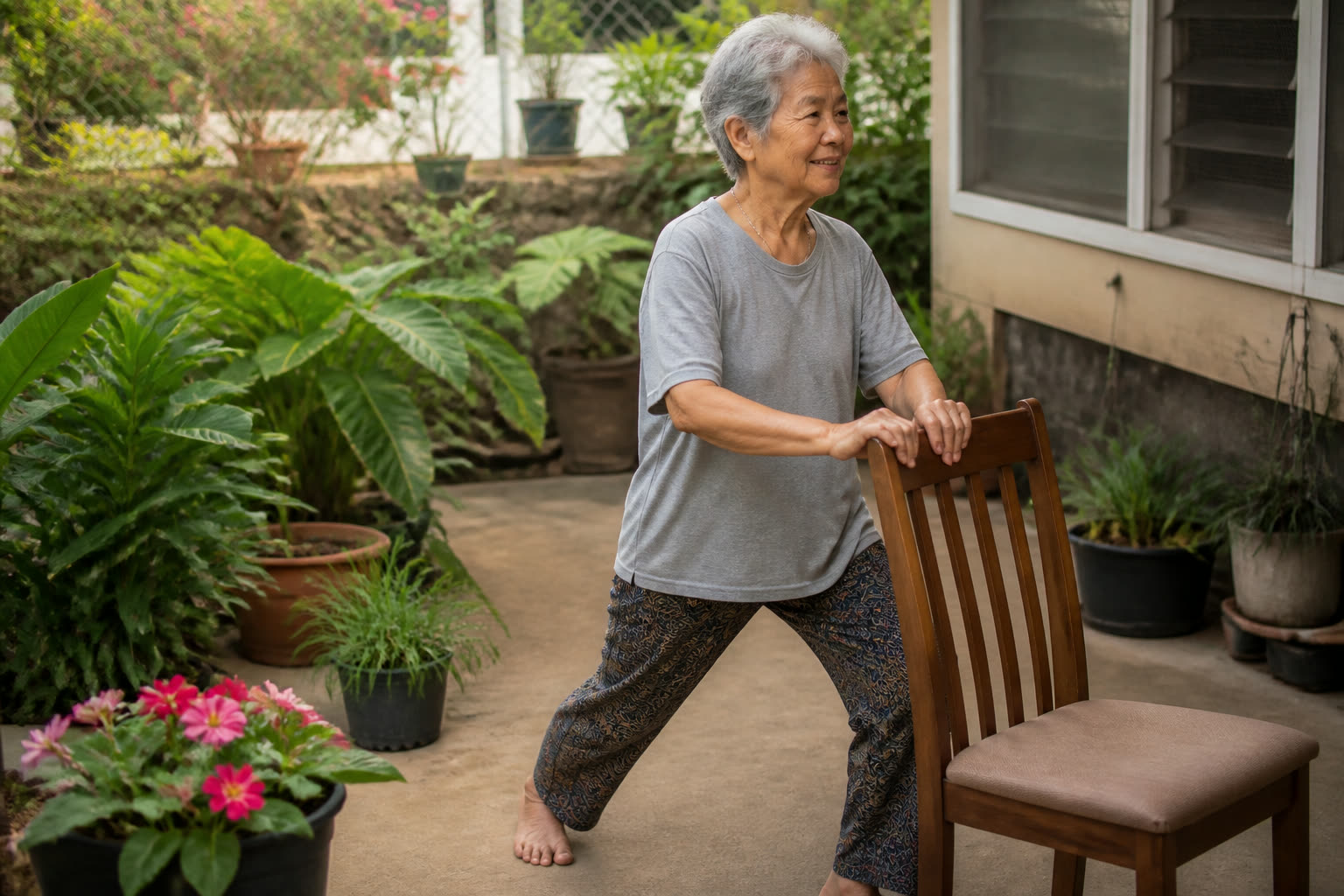
To build a routine that lasts, focus on one primary movement pattern per day rather than trying to accomplish everything at once. Always prioritize your safety by keeping a sturdy kitchen counter, solid chair, or wall within arm's reach for balance support whenever you perform standing movements.
- Pair a short movement habit with an existing daily task, such as stretching lightly after your morning tea.
- Limit your formal exercise focus to just five or ten controlled minutes each day.
- Always use a counter or sturdy rail to support your balance during standing exercises.
- Listen closely to your body and stop immediately if you feel sharp or pinching pain.
By keeping your daily commitments small and resting between efforts, your physical strength and confidence will grow steadily week after week.
Practical Fitness Restart Tips for Older Adults
If you have stepped away from your physical routine, these gentle fitness restart tips will help you regain your momentum without risking injury. The most important step is abandoning the all-or-nothing mindset. Missing a few days or weeks does not erase your potential; restarting is simply a matter of performing one small, positive physical action today.
When returning to exercise, focus on slowing down your movements. Spend three to four seconds lowering body weight or light resistance to strengthen muscles safely while protecting delicate joints. If you are managing chronic health conditions or returning after a major surgery, always consult your physician before increasing your activity level.
- Trade repetitive, high-impact activities for varied, low-impact choices like gentle walking, swimming, or stationary cycling.
- Work at a moderate intensity level where you can comfortably hold a conversation without gasping.
- Focus on smooth, deliberate control rather than quick or sudden motions.
- Celebrate every finished session, no matter how brief it might seem.
Consistency grows from gentle momentum, so take your time and let your body adapt comfortably as you rebuild your routine.
Designing a Safe At Home Senior Workout
Creating an effective at home senior workout routine does not require costly gym memberships or heavy, dangerous weights. Your living room or kitchen provides an ideal environment for functional bodyweight training that supports everyday living activities like climbing stairs or carrying groceries.
Always set up your workout space near a firm counter or heavy dining table to ensure steady balance. Try wall push-ups for upper body strength, supported standing leg lifts for hip stability, and light resistance band pulls for back posture. Always work within a pain-free range of motion and save your gentle flexibility stretching for after your muscles are completely warmed up.
- Clear your workout space of throw rugs, cords, or loose objects to eliminate tripping hazards.
- Keep a firm handhold on a solid surface whenever practicing balance or standing strength drills.
- Allow full rest days between training the same muscle groups to support natural repair.
- Stay well-hydrated before, during, and after your physical session.
By practicing smooth, supported movements in the comfort of home, you protect your joints while building dependable functional fitness.
For general background, see National Institute on Aging guidance on maintaining exercise motivation and consistency in older age..
FAQ: Questions I Get Asked Most
How can older adults maintain exercise consistency over time?
Achieving exercise consistency for seniors relies on short, manageable sessions rather than intense, lengthy workouts. By rotating your daily physical focus, utilizing supportive surfaces for safety, and taking built-in rest days, you create a sustainable habit that builds strength without causing exhaustion or joint pain.
Is it safe to restart an exercise routine after taking months off?
Yes, restarting is safe when done gradually. Begin with light bodyweight movements near a sturdy counter for balance support. Keep sessions brief, move slowly, avoid sharp movements, and consult your healthcare provider before starting if you have underlying medical conditions.
How much exercise do seniors really need each day to see results?
Seniors can achieve excellent health benefits from just 10 to 15 minutes of daily focused activity. Alternating short strength, stamina, and stretching sessions with adequate rest gives your muscles time to rebuild safely without overwhelming your body.
What should I do if a movement causes joint discomfort?
Sharp or pinching pain is a warning signal to stop that exercise immediately. Never force a joint past its natural range. Reduce your movement size, use solid counter support, or switch to a gentler exercise that feels completely pain-free.

About the Author: Douglas Jones, BS, MA, CSCS
Douglas Jones earned his Master's Degree in Exercise Physiology from the University of Maryland and is a Certified Strength and Conditioning Specialist. As an Exercise Physiologist and Concierge Fitness Professional based in Kaua'i, he has helped thousands of clients in person and millions online build simple, science-based habits for strength, stamina, stretching, and sustenance.
Doug is the founder of the Super 7 System — a complete training system you can do at home in as little as 7 minutes a day.
Watch his free intro and start free at Super7System.com.
Medical disclaimer: This article is educational only and is not medical advice, diagnosis, or treatment. Stop any movement that causes pain, and check with your healthcare provider before starting new exercise or changing your diet.
Seven honest minutes at your own counter. Try Super 7 Free →