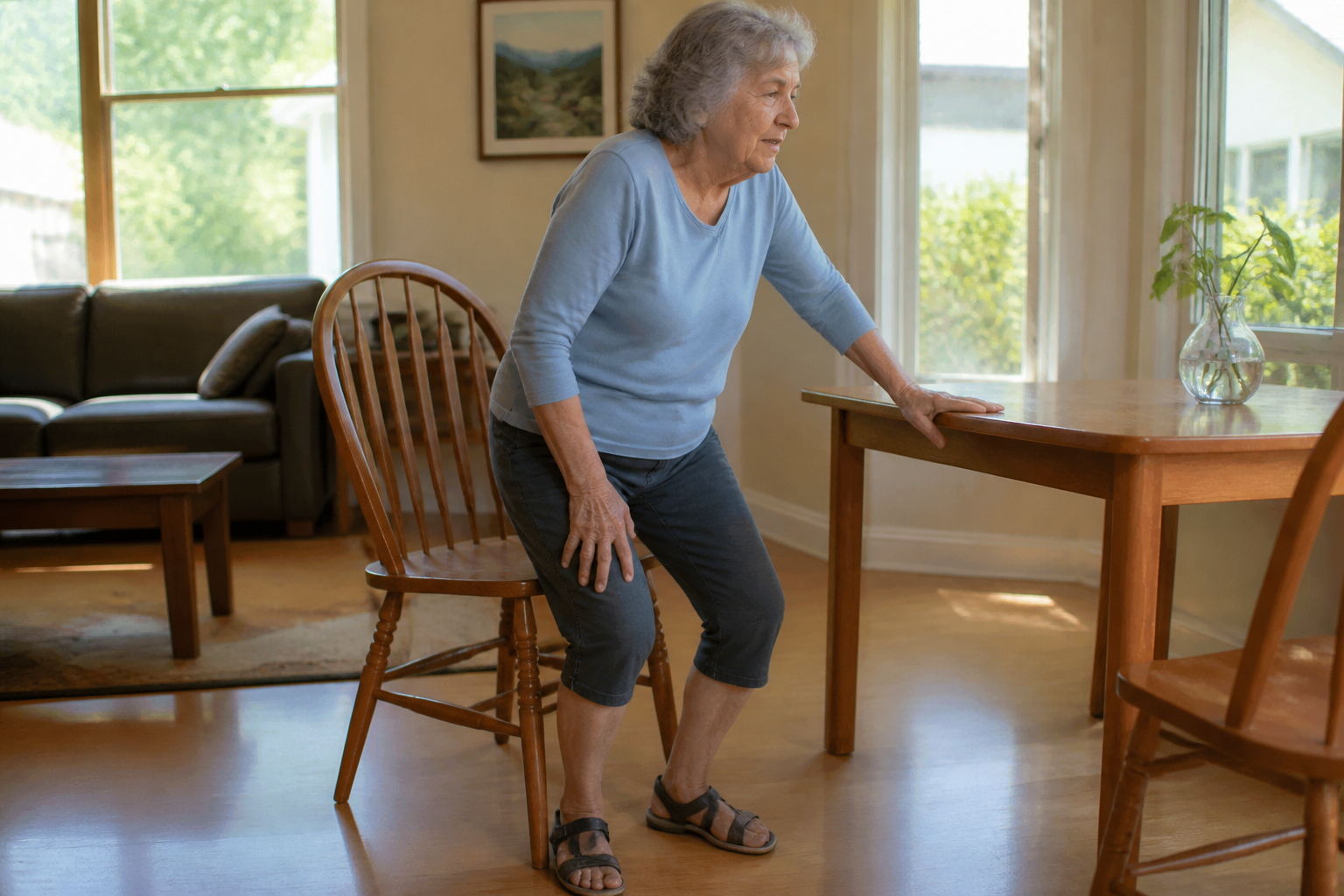
Leg Exercises for Seniors at Home: Strong Legs After 60
By Doug Jones
Leg Exercises for Seniors at Home: Strong Legs After 60
What are safe leg exercises for seniors at home?
Doing safe leg exercises for seniors at home means using supported movements like kitchen counter squats and calf raises to strengthen all your lower body muscles in a single routine. Working your thighs, hips, and calves together ensures balanced strength, improved stamina, and maximum safety without needing heavy gym equipment!
What's In This Article
- Leg Exercises for Seniors at Home: Why We Train LEGS Together
- Why You Should Train All Lower Body Muscles Together
- Simple Leg Exercises for Seniors at Home Using Wall and Counter Support
- Smart Recovery: Giving Your Big Muscles Time to Rest
- Balancing Daily Stamina with Weekly Strength
- Leg exercises for seniors at home: Questions I Get Asked Most
Aloha from beautiful Kaua'i! If you want to keep enjoying your walks near Bali Hai or simply stay steady and independent around the house, keeping your lower body strong is vital! Many folks ask me how to split up their workouts throughout the week, but when looking at safe leg exercises for seniors at home, my rule is simple: always train your entire lower body in one single workout!
Your leg muscles—quadriceps, hamstrings, glutes, and calves—are huge powerhouses that work together as a tight-knit team every time you take a step, climb stairs, or stand up. By training them together, you maximize your results while giving your joints and muscles the complete rest they need afterward. If you are looking for balanced full body strength routines, focusing on simple, safe movements is always the key! Remember my favorite mottos: Smart-Simple-Speedy-Safe, and 'The difference between doing nothing and next to nothing... is EVERYTHING!'
Here is the column that started it.
Leg Exercises for Seniors at Home: Why We Train LEGS Together
Today we continue with PART TWO of my three-column answer for Billy M’s question: “When I don’t feel like doing a full body workout, how should I split up the muscles?”
Last time, I covered the Upper Body: Push muscles, and why it is important to work muscles that work together, together. Next time, I will delve into their antagonistic counterparts, the muscles of Upper Body: Pull.
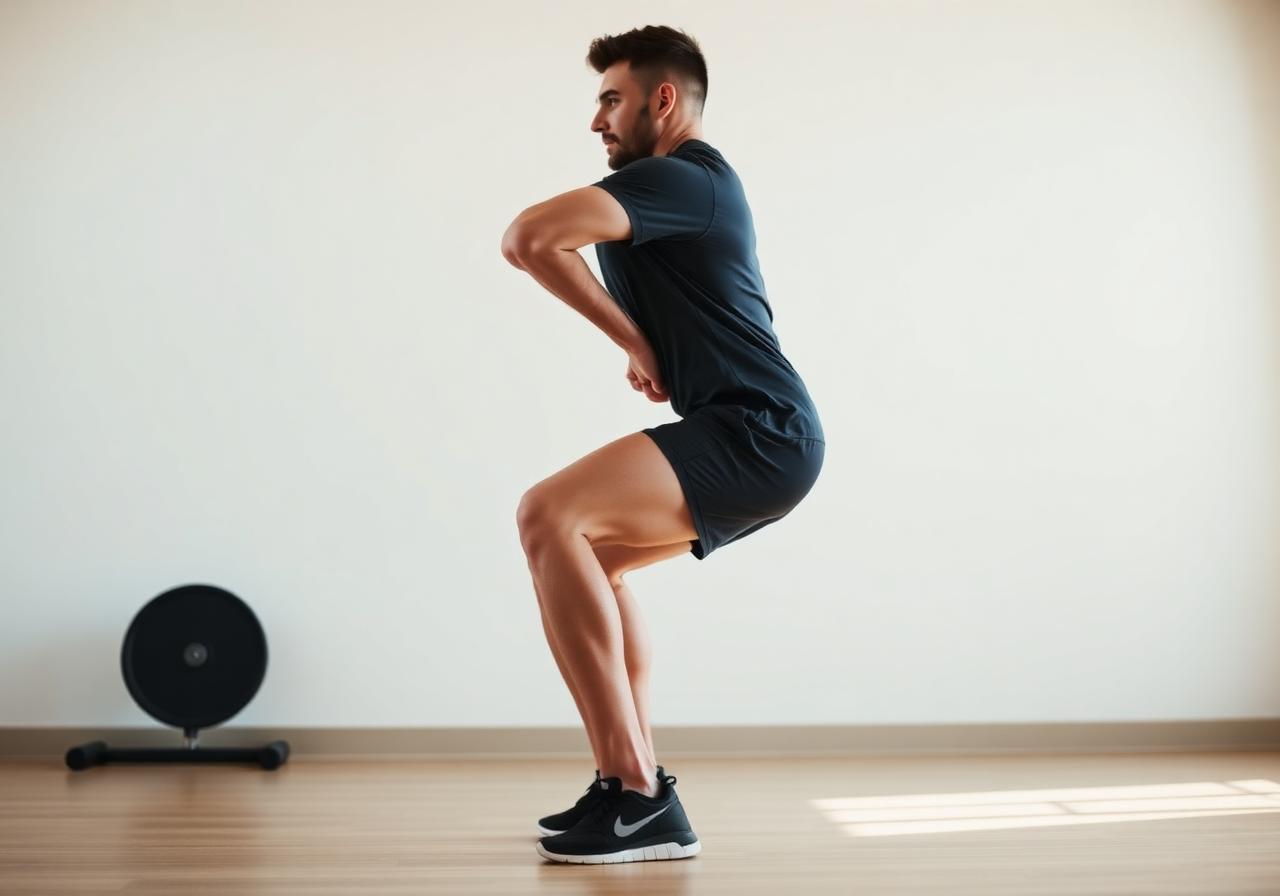
Today, we’re going to jump into the topic of lower body musculature. Welcome to LEGS! Because we’re jumping in with both feet, we need to dive in headfirst. In other words, it’s brain before body today. You’re going to need to concentrate for a few minutes. You’ve got this though; no sweat!
While the upper body can essentially be split into “halves” (Push & Pull) and, thereby, divided between separate workouts, with the lower body, it’s usually best to go all in. Even though training your entire lower body in one workout can be tough, splitting up the muscles of your lower body between workouts is even tougher, albeit nearly impossible.
Your LEGS generally always work together… the left and right go forwards and backwards, up and down, and side to side. Also, while there are definitely distinct push and pull movements for the lower body, more often than not, both of these motions are ordered by the actions of the exact same muscle, often at the same time.
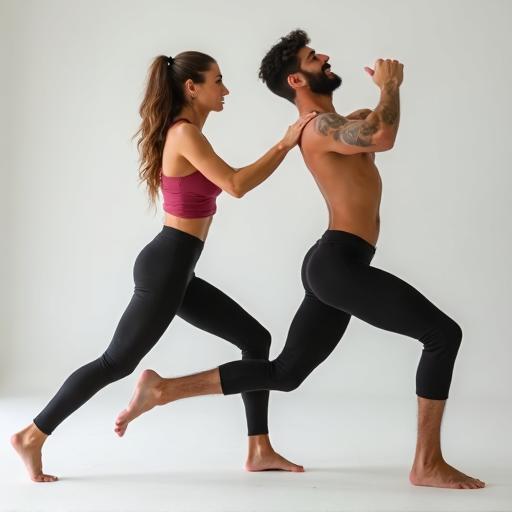
Trying to isolate and split up the “Push” and “Pull” movements for LEGS during a workout is an exercise in frustration. Just look at some of the biomechanical complexities going afoot during lower body training:
The gastrocnemius (main calf muscle) − BOTH straighten the feet (push) AND bend the knees (pull).
The hamstrings (back of the thigh) − BOTH bend the knees (pull) AND extend the hips (push).
The quadriceps (front of the thigh) − BOTH straighten the knees (push) AND flex the hips (pull).

Your LEGS also have muscles that BOTH abduct (push away) AND adduct (pull together). Rotations of the legs, both internally (towards pigeon-toed) and externally (toward duck-footed), come into play, too, even if contractions are used only for static stabilization. And, don’t forget about the cornucopia of cardio, when muscles mix myriad movements.
Within the lower body, muscles and motions go hand in hand. Movements that push also involve muscles that pull. Similarly, and inversely, muscles that push also perform movements that pull. In a nutshell, working out LEGS, in any direction, works both sets of lower body motion movers… PUSH AND PULL.
Because it’s all for one and one for all while working out your lower body muscles, it should be even more so when resting up your lower body muscles.
Your leg muscles are the biggest in your entire body. Regardless of your condition, your gluteus maximus, quadriceps, and hamstrings are huge, at least relative to the rest of your body’s musculature. Foundationally, they demand a lot more effort and intensity during workouts; equally, they deserve a little more rest and recovery after workouts.
Furthermore, applying the principles of Eccentrics (actively lengthening muscle by slowly lowering weight) to lower body strength training unquestionably requires that you give your legs a break. And, in my experience, it is best to break both legs, totally and together. In other words, after you exercise your legs, take some time to fully recover; don’t do any other lower body exercise for at least a day. After you exercise Eccentrics, take some extra time to fully recover; don’t do any other lower body exercise for at least a few days.
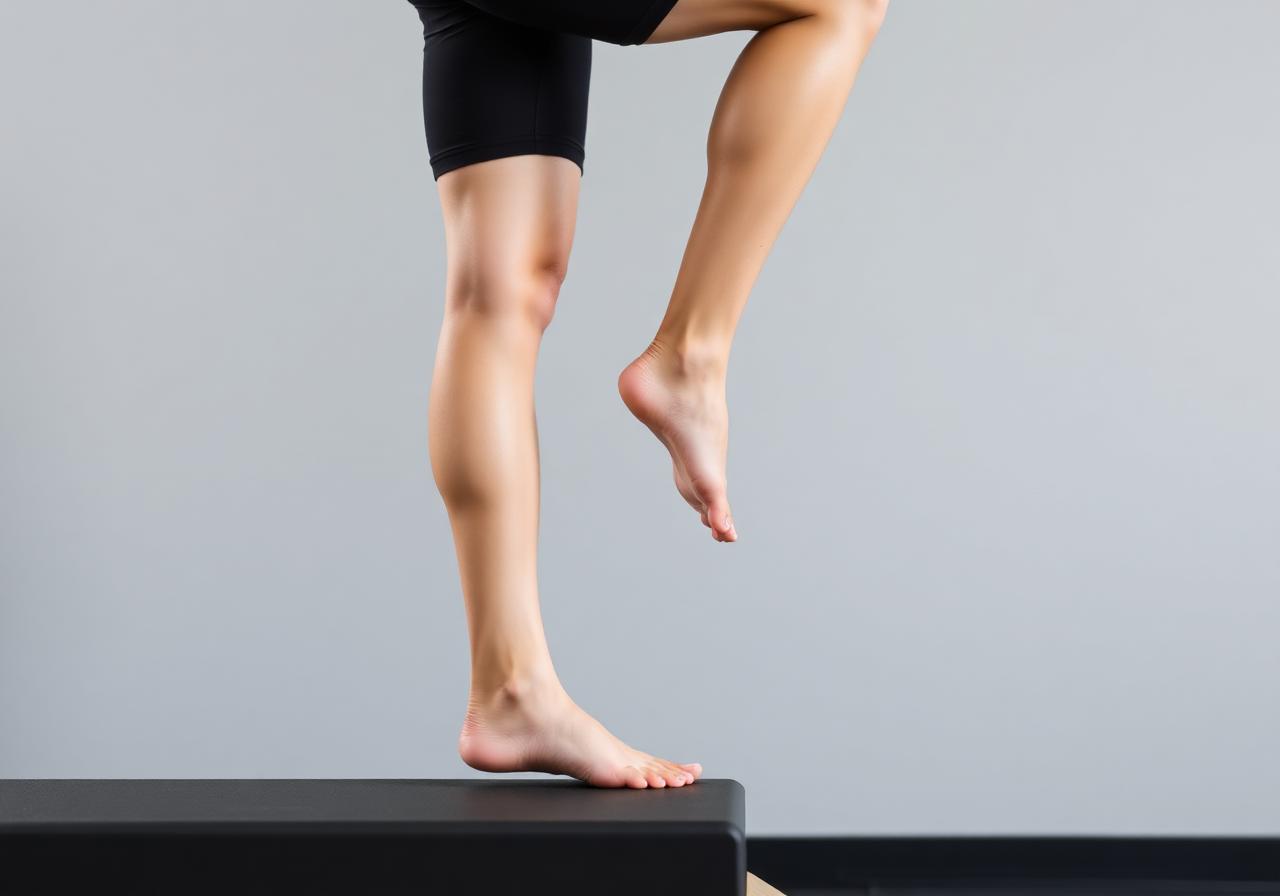
However, Stamina training is different than training for Strength, and to each their own. Stamina, or any cardio- type exercise, is, within reason, usually fine to continue on a regular, if not almost daily, basis. Rest is sometimes rational, but not always required. Strength training for LEGS, on the other hand, demands relaxation. If there was ever a time to focus on recreation after exercise, trust me, this is it.
Ideally, try to work all of the muscles of the lower body in the same workout session with a variety of exercises, such as Squats/Lunges, Leg Extensions, Leg Curls, Adduction/Abduction, Frog Squats, and Calf Raises.
Long story short… don’t do a split routine for your lower body. Do it all at once. Still, even if you only do a few lower body exercises in any given workout, you should still rest all of your lower body muscles afterwards.
Why You Should Train All Lower Body Muscles Together
The Lower Body Teamwork Principle
Upper body workouts can easily separate pushing muscles from pulling muscles. But your lower body is a completely different story! Your quadriceps, hamstrings, calves, and glutes work in tandem every single time you move. For instance, your calf muscles straighten your foot while bending your knee at the exact same time! Trying to split lower body training into separate 'push' and 'pull' days is an exercise in frustration.
That is why I always teach seniors to hit every major leg muscle group in a single, focused session. Working the entire lower body together ensures balanced development, proper mechanics, and prevents joint strain. If you want to explore more guided senior exercise plans, keeping your lower body workouts consolidated is always the smartest approach!
Simple Leg Exercises for Seniors at Home Using Wall and Counter Support
Safe Movements at the Kitchen Counter
You do not need fancy gym equipment or heavy weights to build strong lower body muscles. In fact, performing leg exercises for seniors at home using your kitchen counter or a sturdy wall for support is one of the safest methods available. Always keep both hands or at least one firm hand on a sturdy surface for maximum stability!
- Supported Counter Squats: Stand facing your kitchen counter and hold on with both hands. Keep your tall posture and bend your knees slightly, bending backward as if reaching for a sturdy seat, then press firmly through your feet to stand upright.
- Standing Calf Raises: Stand tall while holding the counter. Press up onto the balls of your feet, hold for a brief second at the top, and lower your heels back down slowly.
- Standing Hamstring Curls: Holding the counter for support, gently bend one knee to lift your heel toward your glutes, then slowly lower it back down. Repeat on the other side.
- Side Hip Abductions: Stand tall, holding the counter, and smoothly sweep one leg out to the side without tilting your torso. Bring it back gently and switch sides.
Smart Recovery: Giving Your Big Muscles Time to Rest
Why Rest is Crucial After Lower Body Workouts
Your leg muscles are the largest muscle groups in your entire body. Because your glutes, quads, and hamstrings are so massive, they demand a tremendous amount of energy during a strength workout. Equally important, they require dedicated rest to rebuild and stay strong. After completing your routine of leg exercises for seniors at home, you must give those muscles at least 24 to 48 hours off from heavy strength work!
If you practice slow eccentric movements—lowering yourself down with deliberate control—your lower body will need even more time to recover. Give both legs a complete break together. Resting your legs after a good workout is not being lazy; it is an essential part of getting stronger YOU!!!
Balancing Daily Stamina with Weekly Strength
Stamina vs. Strength: What You Can Do Daily
While strength training demands dedicated recovery days, stamina training operates under different rules. Gentle cardio, such as taking daily walks around your neighborhood or doing safe water exercises in a swimming pool, is wonderful to practice almost every single day!
Cardiovascular exercise builds your heart health and endurance without creating the deep muscular fatigue caused by strength training. Feel free to enjoy your daily stroll along Kaua'i's scenic paths, but keep your heavy leg strength workouts spaced out. Smart-Simple-Speedy-Safe is always the way to go!
Leg exercises for seniors at home: Questions I Get Asked Most
How often should seniors do leg exercises at home?
You should do lower body strength exercises 2 to 3 times per week, allowing at least one full day of rest between sessions. Because leg muscles are large, they need adequate recovery time to build strength safely!
Can I split my lower body workout into different days?
It is best not to split lower body muscles into separate days. Your leg muscles work interdependently during almost every movement, so working the whole lower body in one routine and then resting it fully is much more effective!
What is the safest way for seniors to do leg exercises at home?
The safest way is standing upright while holding onto a sturdy kitchen counter or wall for support. Supported counter squats, calf raises, and standing hamstring curls allow you to build strength with maximum safety!
Is walking every day enough for lower body strength?
Walking is fantastic for building stamina and heart health, but it does not challenge your muscles the same way strength exercises do. Combining daily walks with 2 to 3 days of supported strength training gives you the best of both worlds!
Ready to put this to work today? Try SUPER 7 FREE for a Smart-Simple-Speedy-Safe daily starting point: no gym, no equipment, no downloads - just open and go.
In Health & With Hope,
Doug :-)

About the Author: Douglas Jones, BS, MA, CSCS
Douglas Jones earned his Master's Degree in Exercise Physiology from the University of Maryland and is a Certified Strength and Conditioning Specialist. As an Exercise Physiologist and Concierge Fitness Professional based in Kaua'i, he has helped thousands of clients in person and millions online build simple, science-based habits for strength, stamina, stretching, and sustenance.
Doug is the founder of the Super 7 System — a complete training system you can do at home in as little as 7 minutes a day.
Watch his free intro and start free at Super7System.com.