
Pull Workout Routine for Seniors: Back & Biceps Training
By Doug Jones
Q: What are the benefits of a pull workout routine for seniors?
A: A pull workout routine for seniors targets back and bicep muscles that work together, building postural strength and simplifying your weekly fitness split safely.
What's In This Article
- Doug's original column: PULL Muscles
- Incorporating a Back and Biceps Workout for Older Adults
- Why a Push Pull Legs Split for Seniors Works So Well
- Choosing the Right Senior Upper Body Exercises for Safe Pulling
- FAQ: the questions I get asked most
Building an effective pull workout routine for seniors comes down to understanding how your back and arms work together as a cohesive team here in our home routine.
When we pull something toward us—whether opening a heavy sliding door or using a simple resistance band—we rely on our upper back muscles, biceps, and hands working in harmony. If you arrange these exercises in the correct order, you keep your joints comfortable and save your energy for the big muscle groups that need it most.
Below is my original column on pulling muscles, where we walk step-by-step through the exact sequence you should follow to protect your grip, maintain steady posture, and get the most out of every movement safely at home.
Start free at Super7System.com, or take the free fitness sampler and see the full program details.
Original Column: PULL Muscles
Hooray! At last, we move onto the third column in our most recent triad of training tricks. Thanks again to Billy M from Moloa`a for his question about how to split up the muscles when you “don’t have the time, energy, or interest in doing a full body workout.”

If you are new to my column, please read parts one and two of this series online. You can find my specific synopses for “Upper Body: PUSH” and “Lower Body: LEGS” at either DougJonesFitness.com or TheGardenIsland.com. Today, we are going to round out our workout with the third, and final, grouping of muscles, “Upper Body: PULL.”
Having separate routines for Push, Legs, and Pull serve as the foundation from which you can organize any workout. While this article is a broad-brush overview, future columns will focus on fine-tuning fitness routines for individual exercisers and individuals’ exercises.

My column about PUSH muscles (chest, shoulders, and triceps) was intended to demonstrate the importance of training related muscles jointly. In other words, we should always try to work the muscles that work together, together. More specifically, if you are going to train the chest muscles during a particular workout, it would be smart to train your shoulders and triceps as well, because these muscles all work together… so you should work them altogether.
My column about LEGS showed that these muscles (gluteals, quadriceps, hamstrings, adductors, abductors, and calves), altogether well-suited for powerful and persistent activity, all, together, require recovery after exercising. In other words, even if your intention is to train only some of your leg muscles during your workout, you must still always rest all of your leg muscles during your recovery. It is difficult to split up the lower body as we do with the upper.
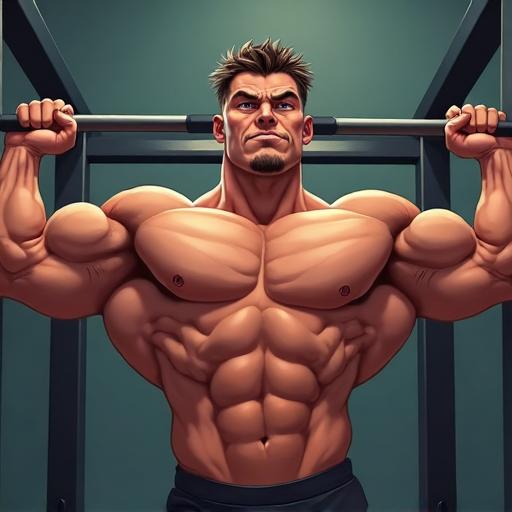
This brings us to the PULL muscles (back, biceps, and forearms), which are perfectly positioned to illustrate the proper order of exercises. For every workout, each group of muscles and their corresponding movements should be arranged in a specific sequence, typically from largest and strongest to smallest and weakest. For PULL, for example, upper back muscles come first… and then biceps… and then forearms.
Why? It’s as easy as one, two, three:
1. When you pull any type of resistance towards your body, hence PULL, you use all of your pulling muscles together at the same time. You are gripping your hands, bending your forearms, flexing your arms, and bringing your elbows closer to your body. Regardless of where you begin or how you pull, all of your pulling muscles are working together to bring your hands to the same finish line, your armpit crease, for lack of a better word (such as “oxter” or “axilla” lol).

2. To receive the most benefit from each and every exercise during a particular workout session, the foremost muscles must be used first most. With PULL, the upper back muscles are bigger than the biceps which, in turn, are bigger than the forearms. As a general rule of thumb, train the biggest and strongest muscles first. It is imperative to train the muscles which require the most energy at the time when you have the most energy. Makes sense, right?
3. The smaller and weaker muscles often act as a direct link to the larger and stronger muscles. As a result, fatiguing the little interferes with training the lot. For example, let’s say that you totally fatigue your forearm muscles with gripping and twisting exercises. Then, with your weakened grip, you try to perform a set of chin- ups or pulldowns, attempting to target your upper back. These latissimus dorsi muscles (or lats) are the largest and strongest in the upper body, but your forearms and fists are the weakest link. If you can’t hang on, you can’t work out.
So, what’s the moral of the story? The lats shall be first… and the fist shall be last.
Every workout should be organized to optimize the training of each muscle. Training muscles in order, large to small, prevents sacrificing a major (such as back) for that of a minor (such as forearms).
Training the “core” is another story, for future papers. Just please realize that the “core” stabilizes your entire body during other exercises, so prematurely fatiguing your midsection could lead to the possible strain of your lower back. Work all other muscles first; work abdominals last. Then, and only then, should you train your lower back muscles. That’s the order, and that’s an order!
Ready to put your pulling strength to work? Try SUPER 7 FREE for a Smart-Simple-Speedy-Safe daily starting point: no gym, no equipment, no downloads - just open and go.
In Health & With Hope,
Doug :-)
Incorporating a Back and Biceps Workout for Older Adults
When setting up a back and biceps workout for older adults, the sequence of your exercises is everything. Your upper back muscles—like your latissimus dorsi and rhomboids—are much larger and stronger than your biceps and forearms. By starting your training session with seated rows or gentle band pull-aways, you use your fresh energy on the major posture muscles that support your spine.
If you were to tire out your arms with bicep curls first, your hands and forearms would give out before your back ever got a thorough, beneficial workout. Here is how to structure your pull movements safely at home:
- Start with Compound Back Movements: Use a resistance band secured around a sturdy post or door anchor. Sit upright, pull your elbows back gently, and squeeze your shoulder blades together without forcing the movement.
- Move to Isolated Bicep Exercises: Once your back exercises are finished, transition to seated bicep curls using light dumbbells or bands.
- Listen to Your Joints: Always stop short of pain. If your shoulders or elbows feel pinched, lower your hands slightly toward your ribs to reduce joint stress.
This simple progression protects your wrists and elbows while making sure your primary posture muscles get the attention they need.
Why a Push Pull Legs Split for Seniors Works So Well
Dividing your weekly routine into a push pull legs split for seniors is one of the safest and most efficient ways to stay active as we age. Rather than trying to exhaust your whole body in one sitting, this split groups related muscles together so they work together and rest together.
On 'Push' days, you focus on your chest, shoulders, and triceps. On 'Leg' days, your hips, thighs, and calves take center stage. Then on 'Pull' days, you give your pushing muscles a complete break while targeting your upper back, biceps, and forearms. This structure gives each muscle group two or three full days to recover before asking them to work again.
For older adults, this built-in recovery time is vital. It keeps your nervous system fresh and helps avoid the overuse fatigue that often leads to joint irritation or tendon strain. If you are planning your week, try scheduling your three movement days with at least one complete rest day in between each session to maintain balance, energy, and joint comfort.
Choosing the Right Senior Upper Body Exercises for Safe Pulling
When selecting senior upper body exercises focused on pulling, control and safety should always take priority over heavy resistance. Pulling movements strengthen the muscles along the back of your shoulders and spine, directly counteracting the forward slump that can develop from sitting or reading.
To perform pulling exercises safely in your living room, keep these fundamental guidelines in mind:
- Use Counter Support When Standing: If performing a standing one-arm row with a light weight, hinge slightly at your hips and place your opposite hand on a solid kitchen counter or heavy table to support your lower back.
- Avoid Straining Your Neck: Keep your gaze looking straight ahead or slightly down. Never jerk your head backward as you pull the band or handles toward your body.
- Protect Your Grip: Keep your wrists straight and avoid letting them bend backward under tension. If your grip starts to feel weak, take a short rest rather than forcing another rep.
Always complete your upper body pulling movements before doing any midsection work. Saving abdominal exercises for the very end ensures your core stays strong to stabilize you throughout your pulling routine.
For general background, see CDC Physical Activity Guidelines Older Adults.
FAQ: Questions I Get Asked Most
What is the safest way to start a pull workout routine for seniors?
To start a pull workout routine for seniors, begin with gentle resistance bands anchored securely at chest height. Focus on seated rows with good upright posture, pulling your elbows back smoothly without arching your spine. Always train your larger back muscles before arm exercises, and check with your healthcare provider before beginning.
Should older adults do bicep curls before or after back exercises?
Always perform bicep curls after your back exercises. Your back muscles are much larger and require more energy. If you fatigue your arms and forearms first with curls, your grip will give out early, making it difficult to safely and effectively train your back and posture muscles.
How often should seniors perform pulling exercises each week?
Performing pulling exercises two to three times per week with at least one full day of rest between sessions is ideal. This schedule allows your joints and connective tissues adequate time to recover while consistently building the upper body strength needed for everyday activities.
Why is upper back strength so important as we age?
Upper back strength supports upright posture, balance, and spinal stability. Strengthening your pulling muscles pulls your shoulders back and counteracts slumping, making daily tasks like opening heavy doors, carrying groceries, and sitting upright much easier and safer for older adults.

About the Author: Douglas Jones, BS, MA, CSCS
Douglas Jones earned his Master's Degree in Exercise Physiology from the University of Maryland and is a Certified Strength and Conditioning Specialist. As an Exercise Physiologist and Concierge Fitness Professional based in Kaua'i, he has helped thousands of clients in person and millions online build simple, science-based habits for strength, stamina, stretching, and sustenance.
Doug is the founder of the Super 7 System — a complete training system you can do at home in as little as 7 minutes a day.
Watch his free intro and start free at Super7System.com.
Medical disclaimer: This article is educational only and is not medical advice, diagnosis, or treatment. Stop any movement that causes pain, and check with your healthcare provider before starting new exercise or changing your diet.
Seven honest minutes at your own counter. Try Super 7 Free →