
Strength Training Tips for Seniors: Top Rules for Safety
By Doug Jones
Q: What are the most essential strength training tips for seniors?
A: Essential strength training tips for seniors include warming up before resistance exercises, controlling movements properly, and avoiding intense static stretching prior to lifting heavy weights.
What's In This Article
- Doug's original column: HOW two... Exercise Strength?
- Practical guidance for warming up before strength training
- Choosing safe resistance exercises for older adults
- Essential flexibility and weight lifting rules to remember
- FAQ: the questions I get asked most
Finding reliable strength training tips for seniors can feel overwhelming with all the conflicting advice out there, but building muscle safely at home is simpler than you might think. Aloha! Here on Kaua'i, I hear from folks every week who want to stay strong for gardening, walking our beautiful trails, or playing with grandchildren without hurting their joints.
Strength training is not about lifting heavy iron or pushing through sharp pain. It is about helping your body move smoothly, protecting your spine, and keeping your independence for decades to come.
Below is a classic column where I share my core principles for working out safely, breathing correctly, and getting the best results without overdoing it. Take a quick read, and then let's look at how you can apply these ideas safely at home this week.
Start free at Super7System.com, or take the free fitness sampler and see the full program details.
Original Column: HOW two... Exercise Strength?
"How Two Exercise?"
Top Ten Training Tricks!
Aloha Doug,
Mahalo for all of the information in your column. I’ve been good about doing cardio but I know that lifting weights is important too. Can you please give me some basic tips for strength training? There are so many different opinions out there and I’m just not sure what’s right anymore.
- Judith C, Kapaa -
Aloha Judy,
Training your muscles with resistance is one of the most productive methods for rapidly and radically transforming your physical structure and physiological strength. My Top Ten Training Tricks will help you to maximize the safety and effectiveness of any program that you choose to choose.
1. Warm Before Work!
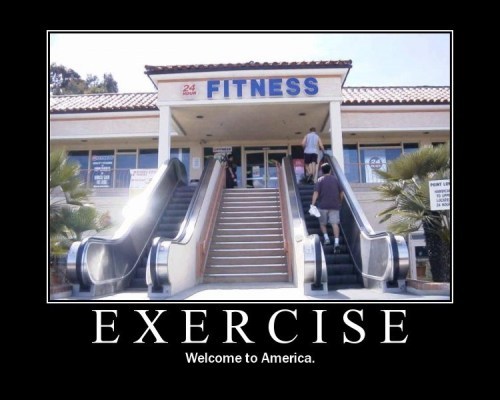
Even on your “non-cardio” days, your muscles must be warmed up before you can safely, and most effectively, perform strength training exercises. No matter what, always perform at least a few minutes of sustained whole-body exercise before targeting specific muscles with free weights, resistance machines, or intense calisthenics. Even if you are really tight on time, it is always better to shorten your workout than to shorten your warm-up. Play it safe and start up slowly.
2. Flex Before Flexibility!
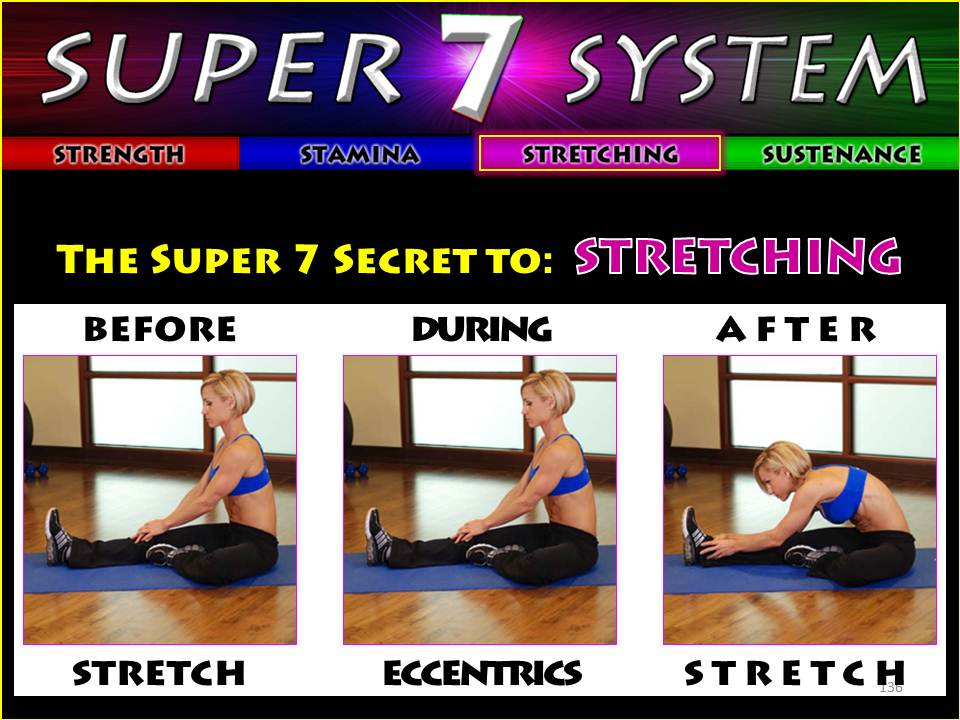
Most people think that stretching is a good activity for warming up; however, if you stretch before exercise, you’ll be sorry. Stretching should always be done at the end of your workout, after the blood is pumping and muscles, tendons, and ligaments are warm. You can either stretch each muscle individually, in between exercises, or stretch your entire body at the end. Never stretch a cold, non-pliable muscle; this may actually pose more risk of injury than not stretching at all.
3. Exhale on Exertion!
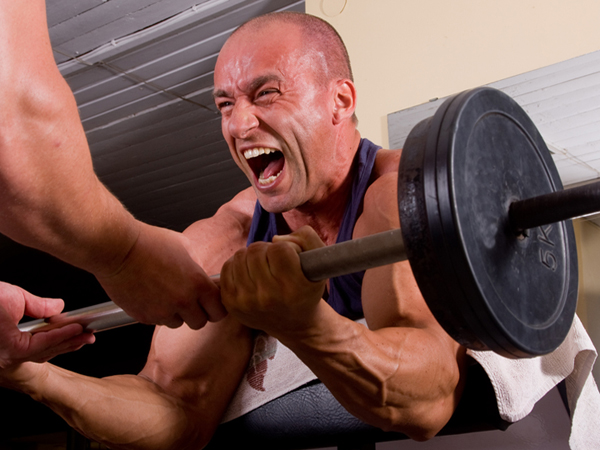
Never hold your breath during exercise. This is probably the most important safety principle. Holding your breath, with your mouth or throat/glottis closed, can temporarily double or triple your blood pressure. Yikes!!! As a general rule, breathe out when you feel like you're exerting pressure (lifting weight and raising resistance); think “blow it up!” Then, breathe normally, in and out, as you release pressure (lowering weight and resisting resistance). If in doubt… breathe out.
4. Rest is Best!
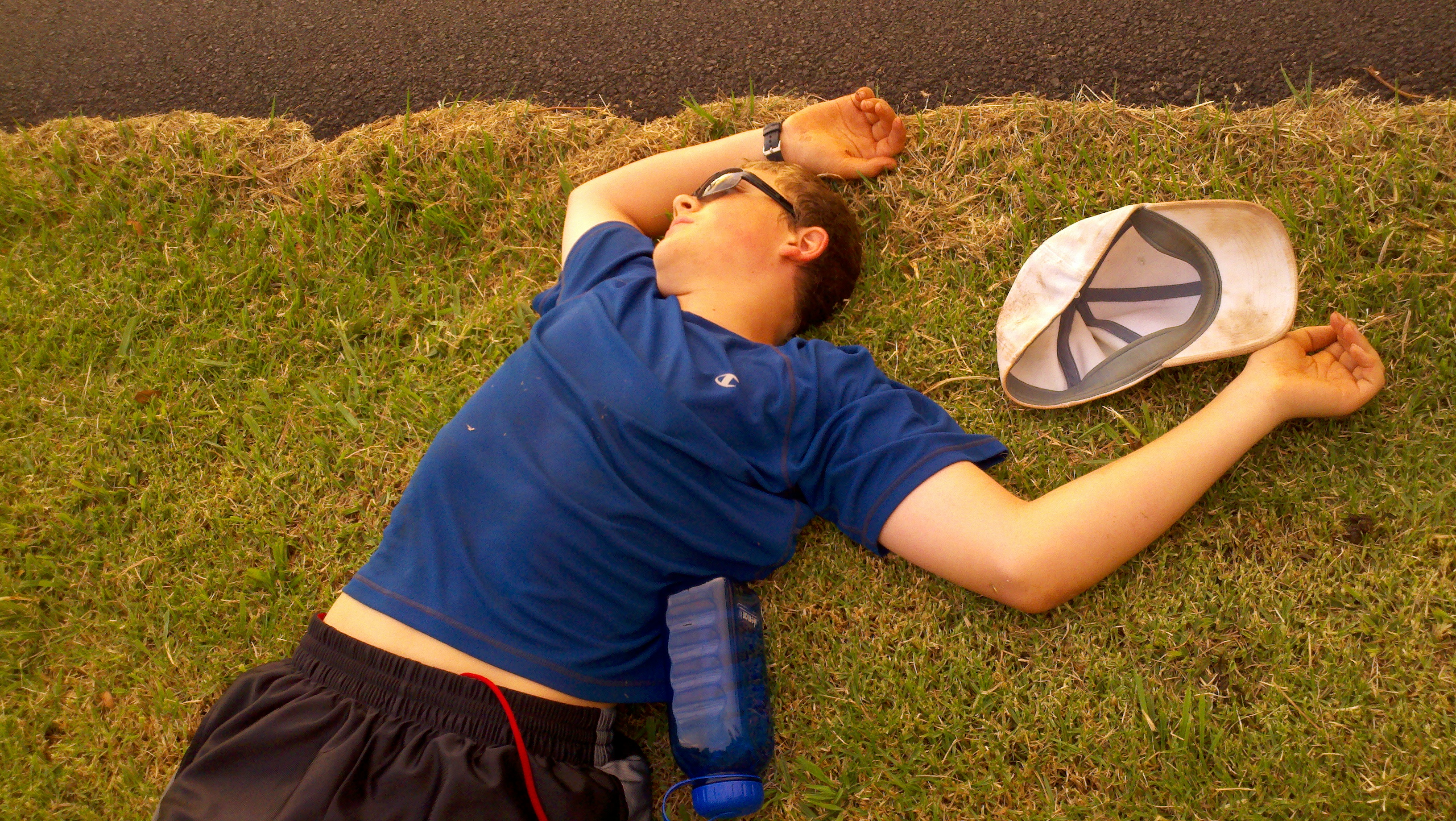
Your body responds to training during rest. Intense training breaks your body apart. Rest allows your body to mend itself back together into a brand new, better you: stronger, faster, leaner, shapelier, and healthier. At the most, you should work a muscle group no more frequently than every few days, and sometimes only once per week when training intensely.
For many people, strength training exercises need to be grouped so that similar muscles are worked on similar days. Not all muscle groups can be isolated, and those that work in tandem have no choice but to contract together. It makes sense that muscles that work together should be worked out together, right? It’s working out the way your body works. Moreover, arranging your workouts according to muscles and their movements assures adequate rest between workouts.
Group 1: Upper Body PUSH -
Group 2: Lower Body LEGS -
Group 3: Upper Body PULL -
Also, on most occasions, exercises should be completed in order from largest to smallest muscles. This allows for most of your energy to be directed toward the larger muscles first, when you have the most energy. It also prevents the smaller muscles (and weakest links) from becoming prematurely fatigued, which decreases the effectiveness of the entire routine.
And what about training abs? Regardless of what you may have seen or heard, my advice is that you always work the abdominal muscles at the end of your workout, since they stabilize the torso while performing other exercises. Even more importantly, lower back muscles should always be worked after the abdominals. Otherwise, if your lower back muscles are prematurely fatigued, and then you work your abs with crunches and twists, the potential of lower back injury increases substantially.
5. The Spice of Life!

With regard to exercise, your body and brain become very familiar, and very bored, very easily. To keep your brain motivated and your body progressing, it is essential that you continually tweak your workouts. One of the best things that you can do to continually realize results is to not do what you’ve just done. Did you do Push-Ups last time? Then do Chest Press this time. Did you do Dumbbell Curls this week? Then do Machine Curls next week. If you continually rotate your muscles’ many motions, your body will get more results from less exercise. Add variety frequently. Physiological and psychological staleness is the beginning of the end, so be sure to add in that specific spice of life... and in good measure.
6. Sets & Reps!

A REP (short for REPetition) is one complete movement of an exercise, basically one lifting and one lowering of a weight. For example, during push-ups, you lift your body up and lower your body back down. That’s one rep. If you perform 10 push-ups in a row, that’s one SET of 10 reps. If you take a short break and then perform 10 more reps, you’ve now completed two sets of push-ups, for a total of 20 reps. Performing more reps and sets is not necessarily the best way to exercise, as there is a significant law of diminishing returns in play. In fact, the most productive time during your entire strength workout is arguably the final rep of your first intense working set, after finishing all lighter warm-up sets.
7. Speed of Movement!
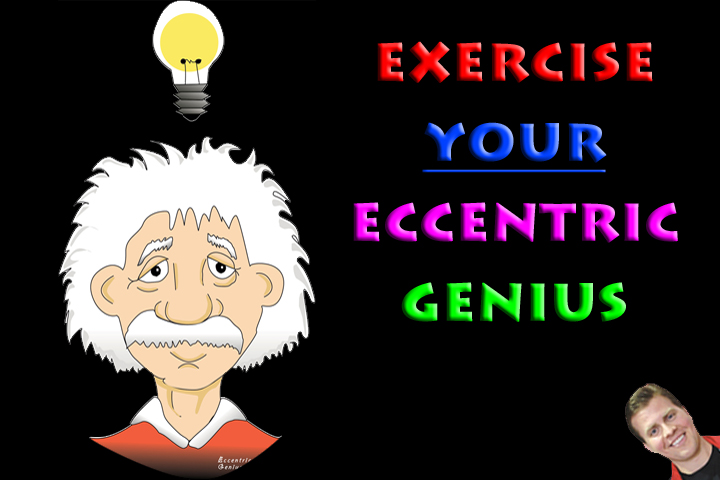
This principle is SO IMPORTANT that I’ve written an entire book about the benefits of slow-motion strength training. An “eccentric” muscle action is the scientific term used to describe a muscle fiber as it lengthens under tension. Learning to “Exercise Your Eccentric Genius” (my book) is indubitably “The Best Way to Exercise” (my business). Long story short... slowly lowering weight is the secret to strength training. If you do nothing else, please perform every single exercise with a deliberately slow speed of movement. Never use momentum to lift a weight; instead, always lift a weight slowly. Then, even more importantly, always lower a weight SUPER SLOWLY! In fact, the only reason that you lift a weight is so that you can lower a weight. Watch your watch. If a set takes less than a minute to perform, please SLOW↓DOWN. Trust me for now; there will be much more on this in columns to come.
8. Exercise Proper Technique!
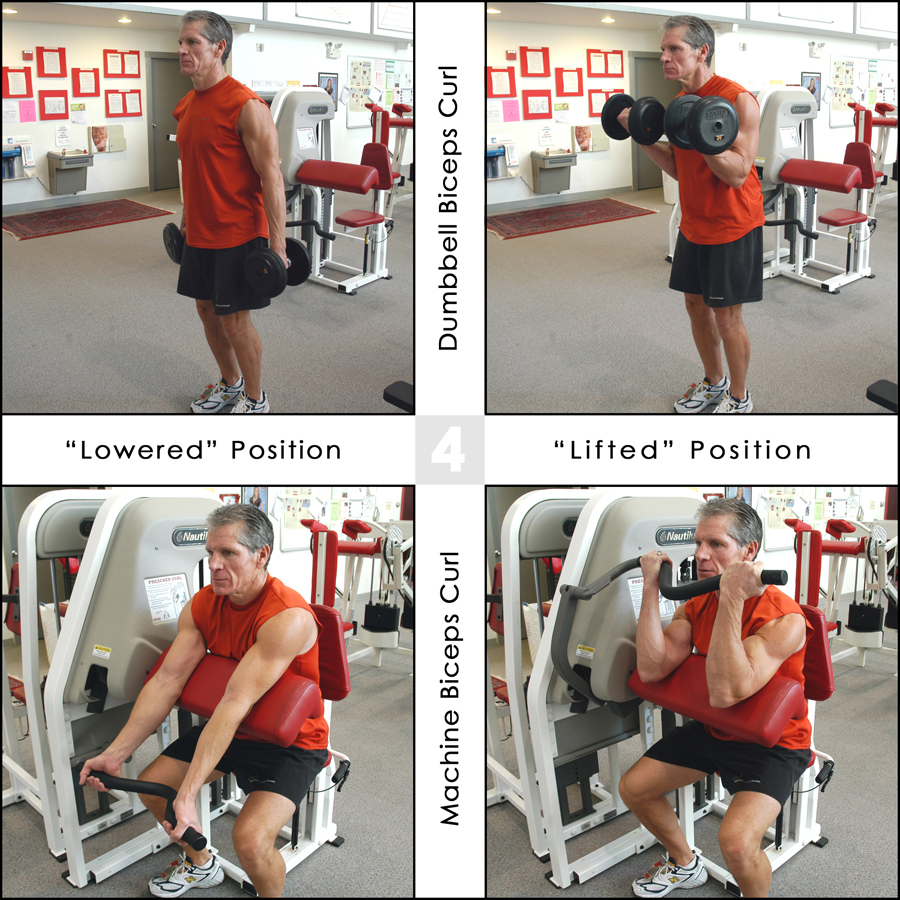
Lowering weight slowly is especially valuable when you perfect your performance by exercising perfect form. Since each specific exercise has its own precise technique, I understand that memorizing meticulous movements can become a little overwhelming for most people. However, as you train your brain as well as your body, you’ll realize that it only takes a few minutes to learn the best way to exercise for each exercise. Master it once and apply it forever. And, I’m always here to help in any way that you see fit! Vast resources are readily available throughout the entire Super 7-Week Shape-Up System; without a doubt, you can be a veritable expert in no time.
9. Perform Progression!
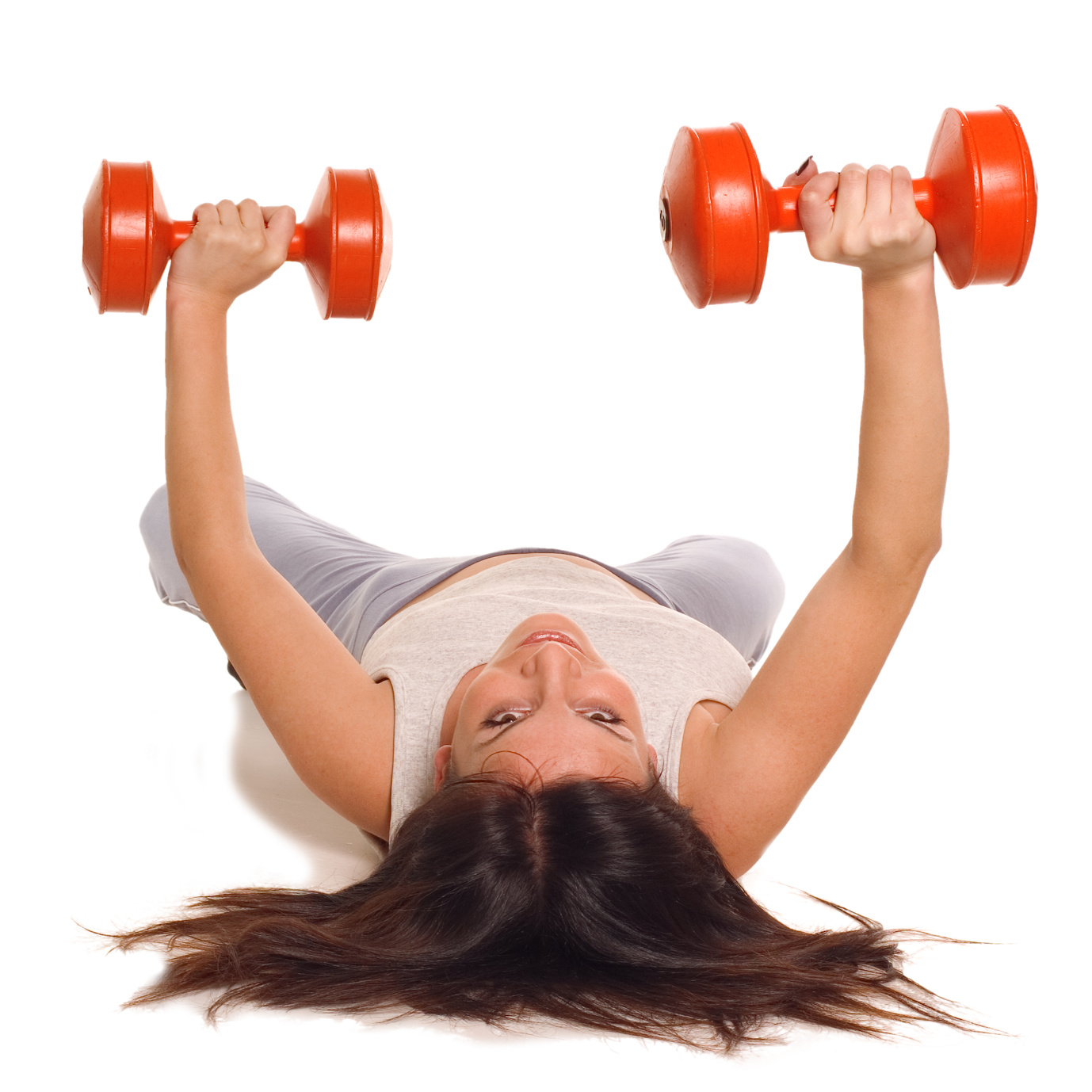
While there are some exceptions to this rule, it is important to try to continually progress by regularly reforming repetitions, resistances, or routines. This won’t necessarily occur during each workout, but overall progression should continue each week, at least until you achieve a level of fitness which you would like to maintain. Progression does not always need to coincide with an improved physique or performance. Larger and stronger muscles show definite progress, but so does any systematic modification to any aspect of your program… reps, sets, exercises, or resistances. Big or small, one step at a time is still progress. Keep in mind that, with progression, there is also a law of diminishing returns. Without question, the most dramatic results of any program always develop from the least amount of exercise. The difference between doing absolutely nothing and next to nothing is tremendous.
10. Seek Professional Guidance!

Last but not least… that’s me!! J Finding a qualified and personable personal fitness professional is no easy task. I should know. Over the years, I’ve interviewed literally thousands of trainers to hire a hundred or so. Regardless of whether or not you are seeking to personally train with someone with my particular education, expertise, or experiences, I am still here to help you, via my column, “In Health & With Hope.” So, if you have any questions about fitness and fat loss, or eating and exercise, I promise to give you my best answers based on decades of experience helping people just like you. I look forward to hearing from you as we all prepare for a healthy and happy new year ahead. Aloha & Mahalo!
In Health & With Hope,
Doug :-)

Ready to put your strength to work? Try SUPER 7 FREE for a Smart-Simple-Speedy-Safe daily starting point: no gym, no equipment, no downloads - just open and go.
In Health & With Hope,
Doug :-)
Practical guidance for warming up before strength training
Cold muscles are like stiff rubber bands—if you pull them too hard right away, they can snap or tear. That is why taking five minutes for warming up before strength training is your best insurance policy against unnecessary aches and pulled tissues.
You do not need a fancy treadmill or exercise bike to get your blood moving safely. Try standing near your kitchen counter for light hand support while doing gentle shoulder rolls, ankle circles, and marching smoothly in place. You can also do gentle arm swings across your chest while taking calm, deep breaths.
Here is a simple warm-up routine you can try in your living room before your next session:
- March gently in place while holding a sturdy counter for balance (1 to 2 minutes).
- Perform light torso twists with soft knees, letting your arms swing easily (1 minute).
- Try countertop standing push-offs to wake up your chest, shoulders, and wrists (1 minute).
Stop as soon as you feel light body warmth and a subtle rise in your breathing. Never push into sharp joint discomfort, and always listen closely to what your body is telling you each morning.
Choosing safe resistance exercises for older adults
When picking movements for your home routine, safety always comes first. Focusing on safe resistance exercises for older adults means choosing functional movements that mimic your daily life, like standing up from a chair or lifting a light bag of groceries.
Instead of heavy free-standing moves that might throw off your balance, focus on supported options. Sit-to-stands using a sturdy dining chair are fantastic for building leg strength. Keep your feet flat, press through your heels, and stand upright smoothly. If balance feels tricky, hold onto a counter while doing simple heel raises or side leg lifts to strengthen your hips without fall risk.
Keep these sensible rules in mind as you build your weekly routine:
- Start with light resistance bands or bodyweight before reaching for handheld weights.
- Keep your movements smooth and controlled—take two seconds to lift and two seconds to lower.
- Always keep a solid support, like a wall or counter, within arm's reach.
If you have joint replacements, osteoporosis, or blood pressure concerns, check in with your healthcare provider before introducing new resistance moves to your regular routine.
Essential flexibility and weight lifting rules to remember
Understanding proper flexibility and weight lifting rules helps protect your tendons and joints while keeping your muscles supple. One of the biggest mistakes folks make is stretching cold muscles before lifting, which actually weakens muscle power and increases injury risk.
Save your deep stretching for after your strength work, when your body is warm and your circulation is humming. Post-workout flexibility work restores natural muscle length and calms your nervous system down so you bounce back feeling refreshed instead of stiff the next morning.
Try these sensible post-workout stretch guidelines to protect your joints:
- Hold each gentle stretch for 20 to 30 seconds without any bouncing or jerking.
- Focus on key areas like your calves, hamstrings, chest, and upper back.
- Breathe deeply into each movement, exhaling naturally as your muscles relax.
Remember that stretching should feel like a mild, comfortable release—never a sharp pull. If a joint feels hot or uncomfortable, back off gently and rest.
For general background, see NIA getting started with exercise.
FAQ: Questions I Get Asked Most
How often should older adults do strength training?
For most folks, two to three days a week is plenty. Your muscles need about 48 hours to rest and rebuild between workouts. Following proven strength training tips for seniors means prioritizing recovery just as much as exercise, ensuring you stay strong without burning out or aggravating your joints.
Can I use household items instead of gym weights?
Yes! Water bottles, soup cans, or light resistance bands work wonderfully for building muscle safely at home. Bodyweight movements like wall push-ups and chair sit-to-stands also offer fantastic resistance. Always make sure whatever you hold is easy to grip and easy to put down safely.
Is it normal to feel sore after lifting weights?
A light, comfortable warm feeling in your muscles the day after exercise is normal as your body adapts. However, sharp joint pain, sudden swelling, or deep discomfort is a sign to stop and rest. Always move smoothly and stop any exercise that causes sharp discomfort.
Should I breathe in a specific way while exercising?
Yes! Never hold your breath when pushing or lifting weight, as that spikes your blood pressure quickly. A good rule of thumb is to blow out air on the hard part of the movement—like pushing away from a wall—and inhale smoothly as you return to start.

About the Author: Douglas Jones, BS, MA, CSCS
Douglas Jones earned his Master's Degree in Exercise Physiology from the University of Maryland and is a Certified Strength and Conditioning Specialist. As an Exercise Physiologist and Concierge Fitness Professional based in Kaua'i, he has helped thousands of clients in person and millions online build simple, science-based habits for strength, stamina, stretching, and sustenance.
Doug is the founder of the Super 7 System — a complete training system you can do at home in as little as 7 minutes a day.
Watch his free intro and start free at Super7System.com.
Medical disclaimer: This article is educational only and is not medical advice, diagnosis, or treatment. Stop any movement that causes pain, and check with your healthcare provider before starting new exercise or changing your diet.
Seven honest minutes at your own counter. Try Super 7 Free →